

As featured in Cow Management Magazine’s Slurry Management Special June 2026
Investing in slurry storage and inoculants is helping a Welsh dairy farmer save time and money while significantly boosting grass yields.

Rhys Watkins
Rhys Watkins, who milks 480 cows alongside 380 youngstock at Pantglas Home Farm near Carmarthen, estimates he is producing an additional 1,000 tonnes of grass each year and using 10% less bought-in fertiliser by improving how slurry is managed and applied.
Five years ago, he invested in a clay-lined, three-million-gallon slurry lagoon to increase storage capacity and improve utilisation.
“Our old lagoon only gave us 3–4 weeks of storage, so we couldn’t use the slurry as efficiently as possible. Spreading slurry over winter is a headache, and there are no nutrient benefits to spreading at that time of year. With the winters getting wetter, we decided to invest in the infrastructure,” he says.
Cows are housed inside all year round, as are the 380 youngstock throughout the winter. All the slurry from the housing is scraped into slats, which then feed into the lagoon. Slurry is applied via an umbilical system with a dribble bar, with 3,000 gallons per acre applied before the first cut of silage and after each subsequent cut, with 4–5 cuts taken a year.
“We are short of land and feed our cows heavily, so we need to get as much out of the ground as possible,” he says.
His cows are housed year-round and fed a diet of grass silage and a pre-mix containing maize gluten, and water. The cows are yielding 10,500 litres, with a fat content of 4.3% and protein at 3.5%.
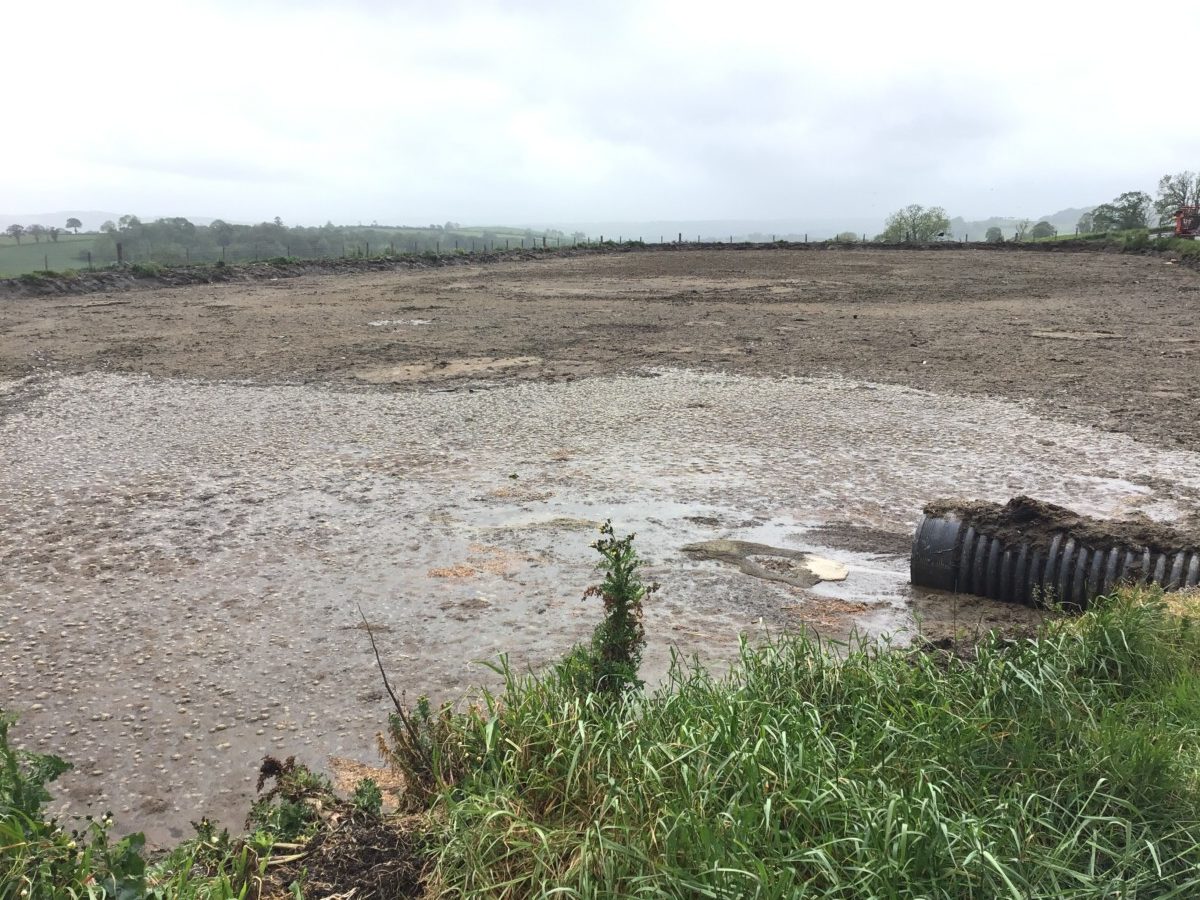
When he first installed the lagoon, he found the slurry was too thick to pump, so they had to add water to thin it down.
“It was too thick to do anything,” he says. ” It didn’t make sense to be adding water, and then the time it was taking to mix. We had 2.5 feet of crust, and that was separating. We needed to improve efficiency, and that’s when we decided to use SlurryBugs from EnviroSystems,” he adds.
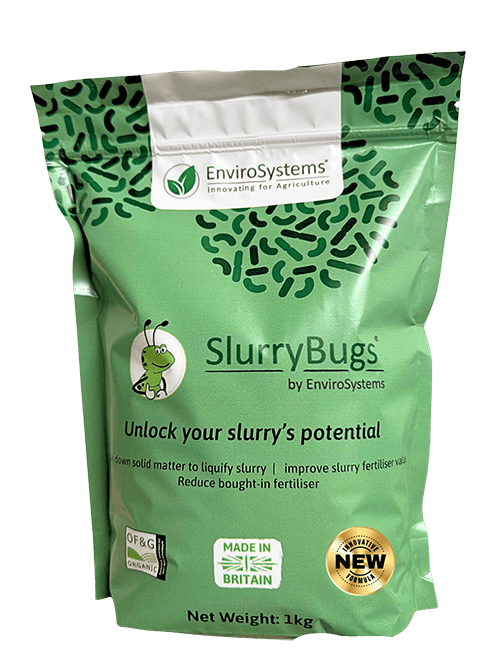
Innovative slurry management product to enhance fertiliser performance and reduce slurry stirring and fuel costs.
Mr Watkins says before using SlurryBugs, it would take 10–12 hours to mix the slurry due to the thick crust, with the tractor running all the time the contractor was pumping. Now they are only mixing the day before and an hour every other day.
“It’s taking just a quarter of the time, and we don’t have to keep the mixer going while spreading slurry, so diesel use is a lot less,” he adds.
Mr Watkins estimates he is saving between £4-5,000 a year in fuel costs from reduced mixing times.
“This is saving a significant amount of money, particularly this year, as fuel costs have doubled, with last month’s red diesel averaging 118p/l. On top of that, our contractor costs have also gone up, so if we can be saving time for contractors and diesel costs, then it’s a win-win .”
Based on fuel and contractor savings at current prices, Rhys is seeing a return on investment on SlurryBugs of 4.5 x per spreading. “It is also easier to pump onto fields, and we are probably using about 10% less fertiliser each season,” adds Rhys.
SlurryBugs is added once a year to the lagoon, usually in the autumn when the lagoon is at its lowest, followed by top ups in the summer months. The bugs rapidly colonise the store and start breaking down new fibrous material. The bacteria and fungi contained within SlurryBugs are unique and have been found to work most effectively on maximising the complex lignocellulosic biochemical pathways within
slurry stores.
The bacteria secrete enzymes that break up undigested fibre (cellulose and other plant matter), releasing soluble nutrients and making them available for spreading onto land, producing a more homogenous liquid slurry.
Sally Russell, Product Marketing Manager of EnviroSystems says the results seen on farm are becoming increasingly common. “What we’re seeing here is a great example of how improving slurry management can deliver real returns, both in terms of efficiency and grass production.
By improving nutrient availability and slurry consistency, farmers can reduce reliance on artificial fertiliser while making better use of existing resources.”
Research by EnviroSystems has found increases in the following nutrients in treated slurry: ammonium nitrogen +21%, phosphorus +48%, potassium +17%, and sulphur +31%. This is because organic materials are released into the slurry when the crust is broken down.
Mr Watkins can vouch for the improved nutrient content of the slurry based on the improvements to his grass quality.
Since using SlurryBugs, he has seen the nutrient value of his slurry improve:
- Total N has increased from 20.00 to 22.40 units N/1000 fresh gallons
- Total P has increased from 6.66 units to 8.76 units P2O5/ 1000 fresh gallons
- Total K has reduced from 26.40 to 24.81 units K/ 1000 fresh gallons
- Dry matter increased from 35.20 to 44.70kg DM due to the slurry being more homogenous
- pH reduced from 7.89pH (alkaline) to a more neutral pH of 7.3 (weak alkaline).
Rhys adds: “Our slurry seems to be having a better response on the grass. Our soil fertility has improved, and the quality of the silage is improving too. Sugar levels have gone right up, and the fermentation in the clamp is a lot better, and we put that down to the slurry.
“It’s definitely a more valuable product we’re putting on the grass. Over a season, we’re producing an extra 1,000 tonnes of grass by having proper slurry storage, applying the slurry when needed, and having the bugs working. We want to maximise the yield potential of grass and reduce fertiliser costs. We are seeing the benefits, with the returns on the infrastructure certainly filtering through,” he says.
Mr Watkins says leys are visually a lot thicker, and grass isn’t going to head, which he believes is because the slurry is being applied at the correct time, resulting in improved soil P and K levels. “This means we are getting a lot more grass per cut—at least a tonne extra per acre,” he says.
Grass is harvested 4-5 weeks after slurry is applied, compared to just 2-3 weeks before investing in the new slurry infrastructure, which is also making the grass more palatable to the cows.
To date, Rhys harvested his first cut on 25 April with a second lot of first cut taken on 1st May, with 390 acres set aside for grazing any youngstock and silage ground.
Research on Slurry Inoculants
A two-year study, funded by Innovate UK and conducted in collaboration with Myerscough College, Preston, shortlisted almost 30 strains of bacteria and fungi, which were tested under laboratory-controlled conditions.
The chosen microorganisms were found to work most effectively on maximising the complex lignocellulosic biochemical pathways within slurry stores. The results showed:
- 29% reduction in crust formation using SlurryBugs.
- 10–15% increase in each of the following nutrients in the treated slurry: nitrogen, phosphorus, potassium, and sulphur. This is because organic materials are released into the slurry when the crust is broken down.
Farm facts
- Milking 480 cows plus 380 youngstock
- Cow yielding 10,500l at butterfat 4.3% and protein 3.5%
- 390 acres set aside for silage and some youngstock grazing
- Cows housed all year and calving all year round


