


At Broompark Farm in Glenluce, Stranraer, Billy and Marion Muir, along with their nephew Willie McHarrie, are maximising teat health in their 160-cow Holstein Friesian dairy herd by maintaining high standards of hygiene in both the parlour and cubicle bedding.
Six years ago, the herd began to see somatic cell counts (SCC) rising above 200,000, with mycoplasma infections leading to multiple cows suffering mastitis at any given time. These infections weakened the cows’ immune systems, compounding the issue.
Initially, they attempted to control mastitis by applying lime to bedding daily, then every other day. However, the lime caused teat irritation, exacerbating the problem. With SCC levels nearing the penalty threshold of 250,000 — which would have cost them 0.5p/litre in milk penalties — the family sought alternative solutions.
The family adopted a vaccination protocol for mycoplasma and switched from sawdust bedding on top of rubber mattresses to a 100% paper crumble bedding. This change improved cow hygiene and comfort while also reducing costs.
“The bedding change definitely seemed comfier for the cows when applied deeply, about an inch at the back of the bed,” explains Willie, who farms under a share farming agreement with his aunt and uncle.
“The bedding is absorbent and easy to work with, and the cows are much cleaner which has definitely helped to improve cubicle hygiene.”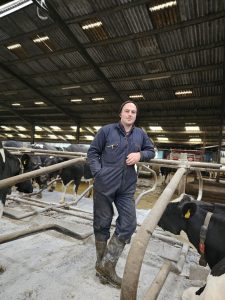
“We have found that putting a good deep layer of bedding on and just knocking off the dirty bits with a brush, then reapplying it once a day, helps keep the cows clean. We can’t fault it and it’s a cost-effective way of maintaining clean cows,” he adds.
Willie says sawdust quality had varied between batches and suppliers, often arriving dusty or containing debris. The paper bedding, however, is consistent and absorbent.
Beds are brushed by hand twice daily, topped up with the paper bedding once a day, and a robotic scraper ensures clean passageways. “We don’t use a mechanical brush as it removes too much of the bedding,” Willie adds.
The use of three Lely milking robots further aids herd health monitoring, with milk conductivity sensors detecting early signs of mastitis. Robots also track milking frequency, with drops in visits often signalling potential issues.
Willie says investment in a pasteuriser for colostrum management is also helping to improve calf health and break the cycle of mycoplasma infection passing from cows to calves and back again, with Mycoplasma bovis being a causative agent of mastitis.
“We are also vaccinating for IBR and Leptospirosis, which, although they don’t cause mastitis directly, can lower the cows’ immunity and potentially make them more susceptible to other infections such as mastitis,” he adds.
“By reducing pathogen load through cleanliness and strengthening immunity by vaccination and improved colostrum management, we are seeing healthier cows, healthier calves and far fewer mastitis cases, which makes all the investment and extra management worthwhile,” says Willie.
The changes have reduced mastitis cases to fewer than 10 annually and brought SCC down to 100,000.
“Mastitis cases are so few we now have boxes of antibiotic tubes going out of date before we’ve used them,” he adds.
Liz Russell, Managing Director of EnviroSystems, who manufacture EnviroBed®️ — 100% paper crumble livestock bedding — says when it comes to cow bedding, consistency is key.
“Cows don’t like change — even small differences in bedding texture or absorbency can make a real difference to lying time and cow comfort, so it’s important to check bedding quality when it arrives.
Ultimately, having a reliable bedding product means less time troubleshooting and more time focusing on other aspects of the herd,” she says.
For best results when bedding up, Liz advises applying a good covering. Don’t overlook daily brushing off of soiled bedding from the back of cubicles and replacing it with fresh bedding from the front.
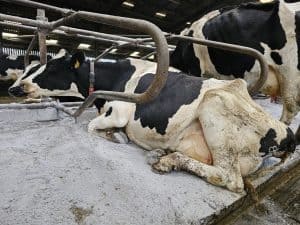
This means there is always clean bedding under the cow, and any unsoiled bedding isn’t brushed off, meaning the load lasts longer.
“Our paper crumble bedding is made from recycled paper and dried in our own plants, so we know it’s consistent and reliable — which matters to farmers. It also takes away some of the uncertainty around the growing season — when straw quality and prices can change — because they can be sure of getting the same product whenever they need it.
“As Broompark Farm has shown, bedding isn’t just a detail — it’s part of a system that supports cow comfort and everyday farm efficiency,” she adds.
Farm facts
-Milking 160 Holstein Friesians plus 85 followers
-Yielding 9500-10,000 litres
-Graze through a Lely Grazeway on an AB paddock system from March-October
-Milked through 3 x robots
-4.5% butterfat, 3.3% protein
-Calving all year round
-Selling milk to Lactalis for Caledonian Cheese
-310 acres- mostly grassland and some crop


